


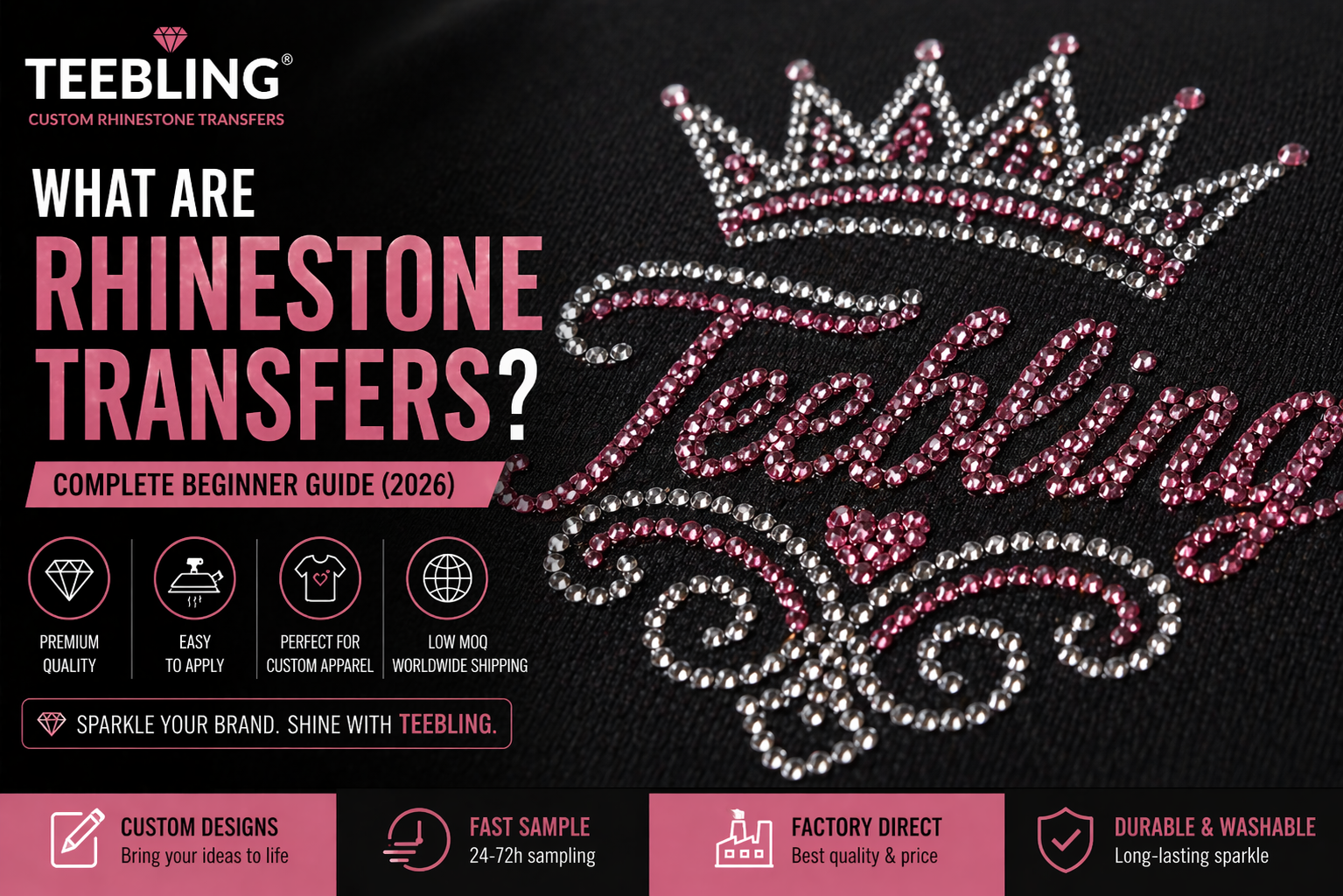
What Are Rhinestone Transfers? Complete Beginner Guide (2026)
Rhinestone transfers are one of the most effective ways to add sparkle, texture, and premium visual appeal to clothing and accessories. Whether you are a fashion brand, a custom apparel seller, an event organizer, or a DIY creator, understanding how rhinestone transfers work can help you create more eye-catching products and make better purchasing decisions.
In this guide, you will learn: what rhinestone transfers are, how they work, the different types available, what materials are used, how to apply them correctly, common mistakes to avoid, and how to choose the right supplier for your business.
What Are Rhinestone Transfers?
Rhinestone transfers are decorative designs made from individually arranged rhinestones that are pre-positioned on a carrier sheet and then applied to fabric using heat and pressure. They are commonly used on T-shirts, hoodies, sweatshirts, tote bags, caps, dancewear, fashion garments, promotional apparel, and custom event clothing.
Instead of placing each rhinestone by hand directly onto the garment, the design is prepared in advance. This makes production faster, cleaner, and much more consistent. Once heat is applied, the adhesive on the back of each stone bonds to the fabric surface, transferring the full design in one process.
In simple terms, rhinestone transfers are a convenient and scalable way to add a sparkling, high-impact finish to apparel without the time and inconsistency of manual stone placement.
Why Rhinestone Transfers Are So Popular
The popularity of rhinestone transfers comes from their strong visual appeal and commercial flexibility. They can instantly transform a plain garment into something more fashionable, expressive, and premium-looking. For brands and sellers, this creates stronger product differentiation. For customers, it creates a more attractive and emotionally engaging product.
Key reasons buyers choose rhinestone transfers:
- Strong sparkle effect that stands out in person and in photos
- Suitable for both small custom runs and bulk production
- Easy application with a heat press
- Ideal for logos, slogans, fashion graphics, and event designs
- Works across many product categories beyond T-shirts
How Do Rhinestone Transfers Work?
A rhinestone transfer works through a combination of design layout, carrier positioning, adhesive activation, and heat pressing. Each rhinestone has a heat-activated glue backing. When the transfer is pressed onto fabric using the correct temperature, pressure, and pressing time, the adhesive melts and bonds the stones to the textile.
Basic workflow:
- Design creation: The artwork or pattern is prepared digitally.
- Stone placement: Rhinestones are arranged according to the design template.
- Carrier preparation: The full design is held on a transfer sheet.
- Heat application: The sheet is placed on the garment and pressed.
- Peeling and finishing: The carrier is removed, leaving the rhinestones attached to the fabric.
Because the design is pre-made, rhinestone transfers provide a cleaner workflow for brands, factories, custom clothing businesses, and resellers. This is one of the biggest reasons they are preferred over hand-setting stones one by one.
Types of Rhinestone Transfers
Not all rhinestone transfers are the same. The right type depends on your business model, design goals, and budget.
1. Ready-Made Rhinestone Transfers
These are pre-designed transfer patterns that are already prepared and ready to apply. They are useful for fast-moving retail products, seasonal collections, or standard designs that do not require customization.
2. Custom Rhinestone Transfers
Custom rhinestone transfers are made based on your own logo, text, artwork, mascot, event theme, or brand concept. This option is best for businesses that want unique products, stronger brand identity, or custom decoration services.
3. Single-Color Rhinestone Designs
These designs use one rhinestone color throughout the pattern. They are clean, elegant, cost-efficient, and often easier to produce in larger volume.
4. Multi-Color or Mixed-Material Designs
These combine different stone colors, stone sizes, or even mixed decorative materials to create a more detailed and premium design. They are ideal for fashion-forward garments and more complex visual concepts.
What Materials Are Used in Rhinestone Transfers?
One of the most important factors in rhinestone transfer quality is the material of the stones themselves. Different materials affect sparkle, weight, durability, and cost.
| Material | Main Advantage | Typical Use |
|---|---|---|
| Glass Rhinestones | Higher shine, more premium look, better clarity | Fashion apparel, high-end branding, performance wear |
| Acrylic Rhinestones | Lighter weight and lower cost | Promotional apparel, event garments, budget-sensitive orders |
For brands that care about stronger sparkle, a more refined finish, and better perceived value, glass stones are usually preferred. For larger promotional runs or more price-sensitive projects, acrylic can still be a practical option.
Where Are Rhinestone Transfers Used?
Rhinestone transfers are highly versatile and can be used across many product types and market segments. They are not limited to fashion brands only.
- Custom T-shirts and hoodies for fashion, boutiques, and online stores
- Caps and hats for streetwear or promotional collections
- Tote bags and accessories for gift items or retail products
- Dancewear and stage clothing where sparkle and visibility matter
- Event apparel for birthdays, teams, clubs, and celebrations
- Brand merchandise for businesses looking to create standout custom items
Benefits of Rhinestone Transfers for Brands and Businesses
If you are running a business, rhinestone transfers are not just a decoration method. They are also a product differentiation tool. They help create a stronger visual identity, make garments look more premium, and can improve perceived product value.
Business advantages of rhinestone transfers:
- Create more premium-looking products without complex manufacturing
- Offer custom decoration services to customers
- Support low MOQ testing before scaling up
- Good fit for boutique brands, seasonal drops, and niche collections
- Can be used for both B2B wholesale and B2C retail models
How to Apply Rhinestone Transfers Correctly
Correct application is essential for durability and clean finishing. While exact settings may vary depending on the stone type, adhesive, and fabric, the overall method remains similar.
Basic application steps
- Pre-press the garment briefly to remove moisture and wrinkles.
- Place the rhinestone transfer in the correct position.
- Use a heat press with suitable temperature, pressure, and time.
- Allow the design to cool if required by the transfer type.
- Peel the carrier sheet carefully and check adhesion.
A professional heat press is strongly recommended for consistency, especially if you are producing products for sale. Household irons may work for some basic uses, but they usually deliver less even pressure and less predictable results.
Common Mistakes to Avoid
Many beginners assume rhinestone transfers are difficult, but most problems actually come from incorrect application or poor material choice. Avoiding a few common mistakes can dramatically improve your results.
- Using the wrong temperature: too low can weaken bonding, too high can damage materials
- Insufficient pressure: uneven pressing may cause stones to lift later
- Peeling too early: some transfers need cooling before carrier removal
- Applying on unsuitable fabric: some delicate or textured surfaces may not bond well
- Skipping testing: always test before bulk production
How Durable Are Rhinestone Transfers?
High-quality rhinestone transfers can be very durable when the correct stones, adhesive, and application process are used. Durability depends on several factors, including the transfer quality, pressing accuracy, garment material, and care after application.
For best results, garments should usually be washed inside out, with mild detergent, and without aggressive drying conditions. Premium transfers that are properly applied can maintain their look well over time, which is why choosing a reliable supplier is so important.
How to Choose the Right Rhinestone Transfer Supplier
If you are buying rhinestone transfers for resale, production, or brand use, your supplier matters just as much as the design itself. A good supplier helps you maintain consistent quality, clearer communication, and faster turnaround.
Look for these qualities in a supplier:
- Experience in custom rhinestone transfer production
- Ability to support custom artwork and logo development
- Low MOQ options for testing and smaller brands
- Fast sampling and clear production timelines
- Stable quality control and consistent stone placement
- Support for bulk orders and international shipping
If you want to build a reliable apparel business, choosing the cheapest option is not always the best choice. A supplier with better quality control can save you money by reducing defective products, returns, and customer complaints.
Are Rhinestone Transfers Good for Small Businesses?
Yes. Rhinestone transfers are especially suitable for small businesses because they allow sellers to create premium-looking custom products without investing in a highly complex production process. If your supplier offers low MOQ and fast sampling, you can test designs more easily before scaling.
This makes rhinestone transfers a strong option for online stores, boutique fashion labels, event businesses, custom gift sellers, and apparel decorators who want to stand out in a crowded market.
Frequently Asked Questions About Rhinestone Transfers
What is the difference between rhinestone transfers and rhinestone appliqué?
Rhinestone transfers are heat-applied stone designs prepared on a carrier sheet, while appliqué usually refers to a layered fabric decoration technique. Rhinestone transfers focus more on sparkle and stone-based decoration.
Can rhinestone transfers be custom-made?
Yes. Many factories offer custom rhinestone transfers based on logos, text, patterns, or full artwork files. This is one of the most common solutions for branded apparel and promotional clothing.
Are rhinestone transfers washable?
High-quality rhinestone transfers can be washable when they are correctly applied and properly cared for. Washing inside out and avoiding harsh treatment can help preserve the design.
Can I use rhinestone transfers on cotton shirts?
Yes. Cotton garments are commonly used for rhinestone transfer applications, although final compatibility depends on the specific transfer and adhesive system used.
Final Thoughts
Rhinestone transfers are a practical, beautiful, and business-friendly decoration solution for custom apparel. They combine visual impact with production efficiency, making them ideal for fashion brands, print businesses, event clothing, and custom product sellers.
If you are just starting out, understanding the basics of rhinestone transfer materials, application methods, and supplier selection can save time and reduce costly mistakes. If you are already running a business, high-quality rhinestone transfers can help you launch more premium-looking products with stronger market appeal.
Need Custom Rhinestone Transfers for Your Brand?
Teebling helps brands, wholesalers, and custom apparel businesses create high-quality rhinestone transfers with flexible MOQ, custom design support, fast sampling, and reliable production.
