


Apparel Branding Guide
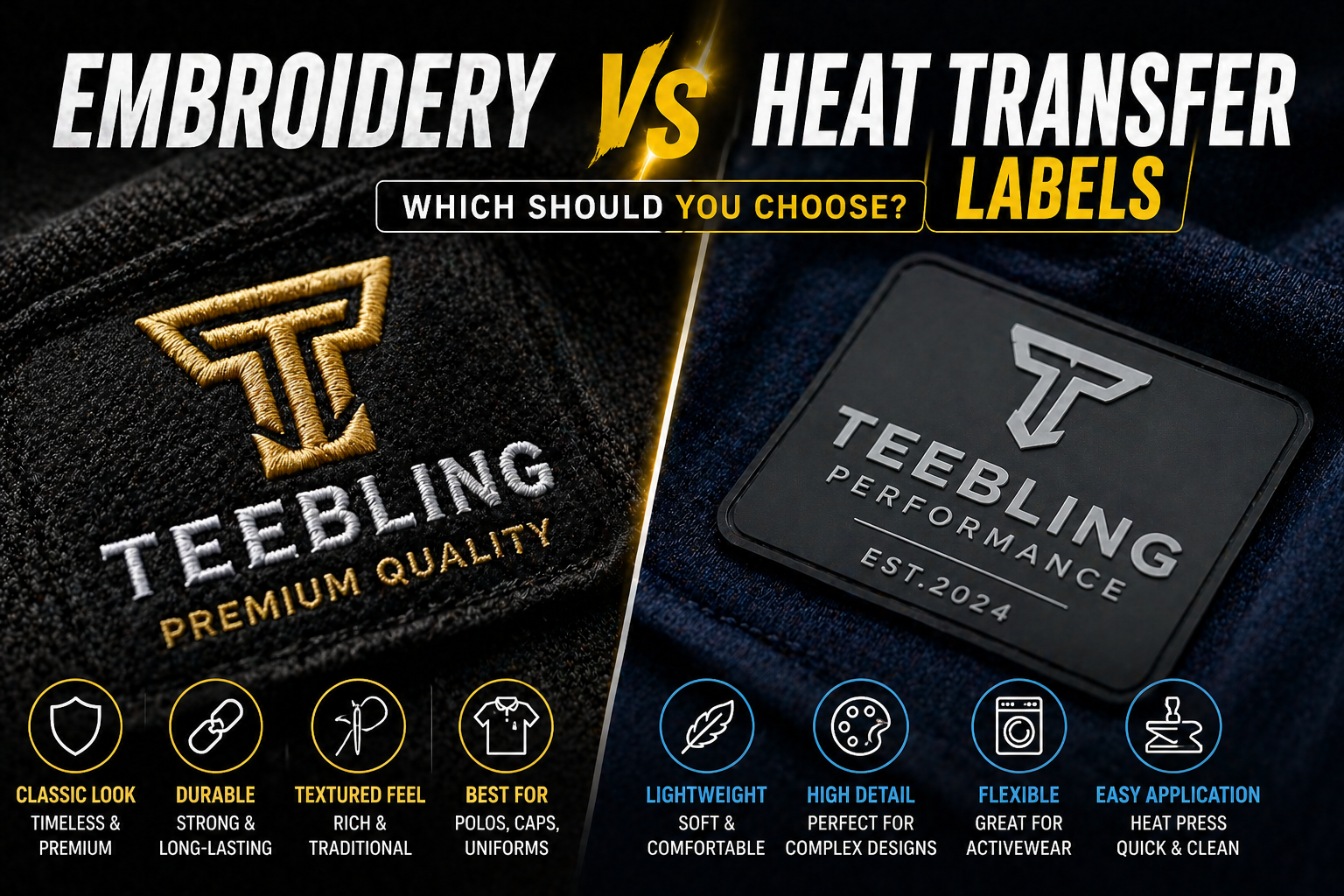
Embroidery vs Heat Transfer Labels: Which Should You Choose?
Embroidery and heat transfer labels are two popular ways to add branding to apparel, bags, uniforms, and accessories. Both can look professional, but they create very different textures, costs, production speeds, and brand impressions.
Quick answer: Choose embroidery if you want a classic stitched texture and premium handmade feel. Choose heat transfer labels if you want clean, modern, lightweight branding with more flexibility for different materials and detailed designs.
What Is Embroidery?
Embroidery uses thread stitched directly into fabric to create logos, text, or decorative designs. It gives a raised, textured, and traditional look that many brands use for polos, uniforms, caps, jackets, and premium casualwear.
Embroidery is often seen as classic and durable, especially for simple logos and thicker fabrics.
What Are Heat Transfer Labels?
Heat transfer labels are logos or brand marks applied to fabric using heat and pressure. They can be made from TPU, silicone, rubber, reflective film, or printed transfer materials.
They are popular for activewear, streetwear, sportswear, bags, tagless neck labels, and modern apparel branding because they create a clean and smooth finish without sewing.
Embroidery vs Heat Transfer Labels: Quick Comparison
| Feature | Embroidery | Heat Transfer Labels |
|---|---|---|
| Look | Classic stitched texture | Clean, modern, smooth or 3D |
| Texture | Thread raised texture | Flat, soft-touch, rubber, TPU, or silicone feel |
| Best For | Polos, caps, jackets, uniforms | Sportswear, streetwear, bags, activewear, neck labels |
| Design Detail | Better for simple logos | Better for thin lines, gradients, and detailed graphics |
| Comfort | Can feel thick or rough inside garments | Lightweight and comfortable |
| Production Style | Stitched directly onto fabric | Applied by heat press |
When Embroidery Is Better
Embroidery is a strong choice when you want a traditional, premium, and textured logo effect. It works especially well on thicker fabrics and structured products.
- Best for polo shirts, caps, jackets, and uniforms
- Great for simple logos and clean lettering
- Creates a classic and professional brand look
- Works well on heavier fabrics
- Good for corporate, school, club, and workwear branding
Best choice: Choose embroidery if your brand wants a classic stitched logo with a traditional premium feel.
When Heat Transfer Labels Are Better
Heat transfer labels are better when you need modern branding, lightweight comfort, and more design flexibility. They are especially useful for performance apparel and products where comfort matters.
- Best for activewear, sportswear, streetwear, and bags
- Good for TPU, silicone, rubber, reflective, and printed effects
- Works well for detailed logos and modern graphics
- Lightweight and comfortable on fabric
- Great for tagless neck labels and clean branding
Best choice: Choose heat transfer labels if your brand wants clean, flexible, modern, and comfortable logo branding.
Which One Looks More Premium?
Both can look premium, but in different ways. Embroidery feels traditional and handcrafted, while heat transfer labels can feel sleek, technical, and fashion-forward.
For corporate polos, school uniforms, and caps, embroidery often looks more classic. For activewear, streetwear, bags, and modern fashion products, TPU or silicone heat transfer labels often look more premium.
Which One Is More Comfortable?
Heat transfer labels are usually more comfortable, especially for neck labels and activewear. They sit smoothly on the fabric and do not create the same stitched backing that embroidery can leave inside garments.
Embroidery can feel thicker, especially on lightweight T-shirts or skin-contact areas. For this reason, many apparel brands use heat transfer labels for inside neck branding.
Which One Is Better for Detailed Designs?
Heat transfer labels are generally better for detailed artwork, thin lines, gradients, small text, and complex graphics. Printed heat transfer labels can reproduce more detail than embroidery.
Embroidery works best with simpler logos, bold shapes, and thicker lines. Very small text or complex details may not stitch clearly.
Which One Is More Durable?
Both embroidery and heat transfer labels can be durable when produced and applied correctly. Embroidery is physically stitched into the fabric, making it very strong on suitable materials.
Heat transfer labels can also last a long time if the correct temperature, pressure, adhesive, and washing care are used. TPU and silicone labels are especially popular for durable branding on sportswear and bags.
Choose Embroidery If...
You want classic stitched branding for polos, caps, jackets, uniforms, or thicker fabrics.
Choose Heat Transfer If...
You want clean, lightweight, flexible branding for sportswear, streetwear, bags, or tagless labels.
Final Recommendation
If your brand wants a classic, stitched, and traditional look, embroidery is a great choice. It works best for simple logos, structured garments, uniforms, caps, and heavier fabrics.
If your brand wants a clean, modern, lightweight, and flexible logo effect, heat transfer labels are usually the better option. They are especially useful for sportswear, activewear, streetwear, bags, and tagless neck labels.
Need Custom Heat Transfer Labels?
Teebling provides custom TPU, silicone, rubber, reflective, and printed heat transfer labels for apparel brands, sportswear, bags, and accessories.
Get a Quote