


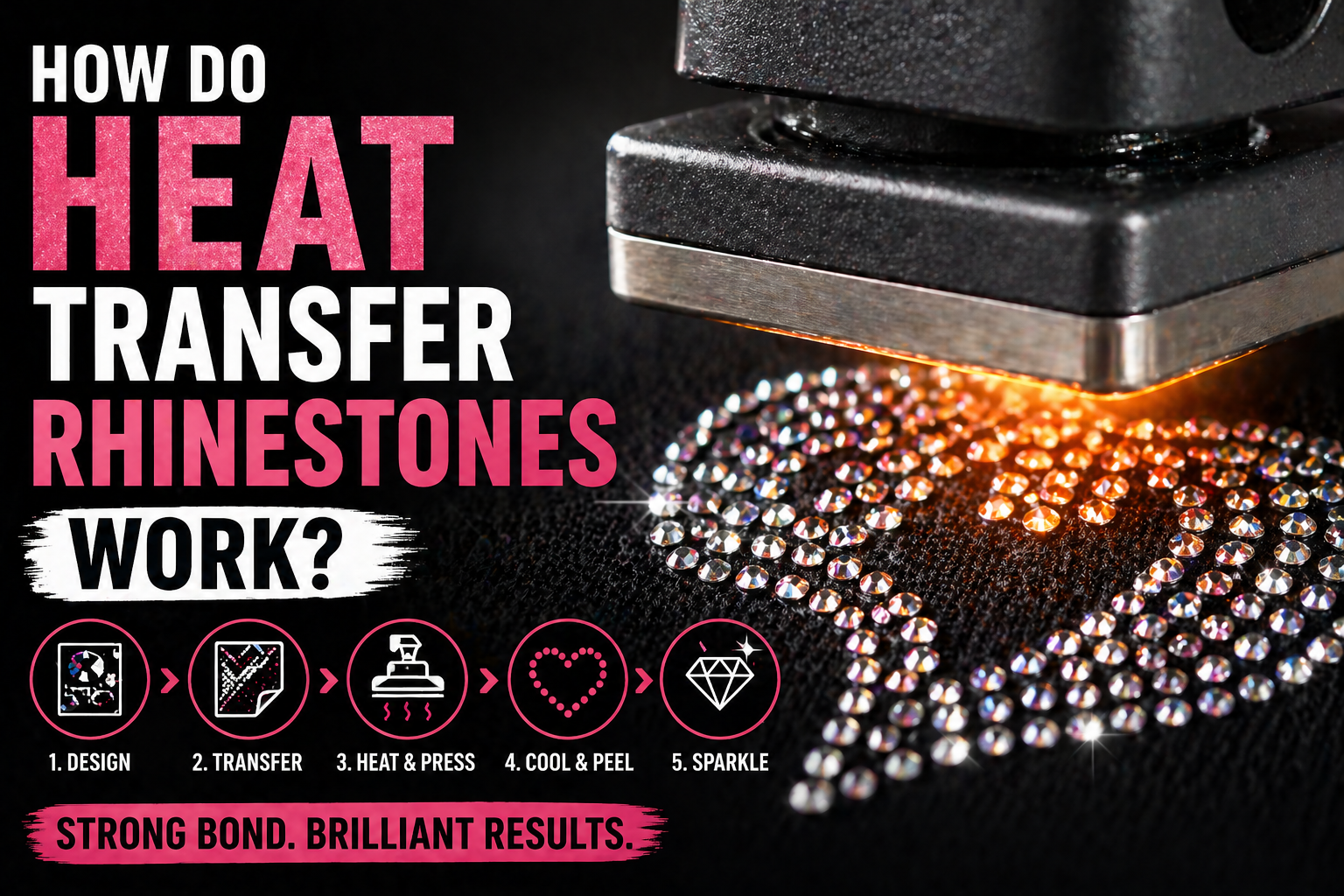
Heat Transfer Rhinestone Guide
How Do Heat Transfer Rhinestones Work?
Heat transfer rhinestones work by using heat and pressure to activate adhesive backing on each rhinestone. Once applied correctly, the stones bond securely to fabric and create a sparkling, professional finish for apparel and accessories.
Quick answer: Heat transfer rhinestones have glue on the back. A heat press melts the adhesive, pressure pushes it into the fabric surface, and cooling helps lock the rhinestones in place.
What Are Heat Transfer Rhinestones?
Heat transfer rhinestones are rhinestones designed for fabric decoration. They are usually arranged into a pattern on transfer film, then applied to garments using a heat press or iron.
They are widely used for T-shirts, hoodies, dancewear, cheer uniforms, caps, bags, denim, team apparel, and fashion accessories.
How the Heat Transfer Process Works
The working principle is simple: heat activates the adhesive, pressure helps the glue bond to the fabric, and cooling makes the bond stronger.
| Stage | What Happens |
|---|---|
| 1. Positioning | The rhinestone transfer is placed on the garment with the carrier film facing up. |
| 2. Heating | Heat melts the adhesive backing on each rhinestone. |
| 3. Pressure | Pressure pushes the melted adhesive into the fabric surface. |
| 4. Cooling | The adhesive cools and becomes solid again, securing the stones. |
| 5. Peeling | The carrier film is peeled away, leaving the rhinestone design attached to the fabric. |
Step-by-Step Application Guide
Step 1: Prepare the Garment
Place the garment flat on the heat press. Make sure the surface is clean, smooth, and free from wrinkles. Pre-pressing for a few seconds helps remove moisture and improves adhesion.
Step 2: Position the Rhinestone Transfer
Place the transfer design on the fabric with the sticky carrier film facing upward. Check the alignment carefully before pressing.
Step 3: Apply Heat and Pressure
Cover the design with a protective sheet and press it using the recommended temperature, time, and pressure. This activates the adhesive backing and bonds the rhinestones to the fabric.
Step 4: Cool and Peel the Film
Allow the transfer to cool slightly, then peel the carrier film slowly. If any stones lift, cover the design again and re-press for a few seconds.
Step 5: Final Press for Better Durability
A short final press helps secure the rhinestones more firmly. This step is especially useful for larger designs, thicker fabrics, or production orders.
Recommended Heat Press Settings
| Setting | Recommended Range |
|---|---|
| Temperature | 150°C – 170°C / 300°F – 340°F |
| Time | 10 – 15 seconds |
| Pressure | Medium to firm pressure |
These settings are general recommendations. Always test first because fabric type, rhinestone size, adhesive quality, and heat press machine can affect the final result.
Why Heat and Pressure Matter
Heat alone is not enough. Pressure is equally important because it helps the melted adhesive grip the fabric. If the pressure is too weak, the rhinestones may not bond properly and can fall off after washing.
Too much heat can also damage fabric or adhesive. The best result comes from balanced heat, proper pressure, and the right pressing time.
Pro tip: If rhinestones do not stick well, the problem is usually low pressure, not enough heat, short pressing time, or moisture in the garment.
Best Fabrics for Heat Transfer Rhinestones
Heat transfer rhinestones work best on fabrics that can handle heat and pressure. Smooth, stable fabrics usually give the best bonding result.
- Cotton T-shirts
- Polyester garments
- Cotton-polyester blends
- Denim jackets and jeans
- Canvas bags and tote bags
- Performance wear and uniforms, if fabric allows heat pressing
Common Mistakes to Avoid
- Skipping pre-press: Moisture and wrinkles can reduce adhesion.
- Using low pressure: The stones may not bond deeply enough to the fabric.
- Peeling too fast: Some stones may lift before the adhesive sets.
- Overheating: Too much heat can damage the fabric or adhesive.
- No test sample: Different fabrics may require different settings.
How to Make Heat Transfer Rhinestones Last Longer
Proper application is the first step. After pressing, correct washing and care also help extend the life of the rhinestone design.
- Wait 24 hours before washing
- Turn the garment inside out before washing
- Use gentle wash settings
- Avoid bleach and harsh chemicals
- Avoid high heat drying when possible
Good Application
Correct heat, firm pressure, clean fabric, pre-pressing, and slow peeling after cooling.
Poor Application
Low pressure, uneven heat, wet fabric, peeling too early, or skipping the final press.
Final Thoughts
Heat transfer rhinestones work by combining heat, pressure, adhesive activation, and cooling. When applied correctly, they create a shiny, durable, and professional decoration effect for apparel and accessories.
For brands, boutiques, dance teams, event organizers, and custom apparel businesses, heat transfer rhinestones are an efficient way to add sparkle and value to products.
Need Custom Heat Transfer Rhinestones?
Teebling provides custom heat transfer rhinestone designs for apparel brands, boutiques, dancewear, events, and promotional products. We support custom artwork, strong adhesion, fast sampling, and business production orders.
Get a Quote