


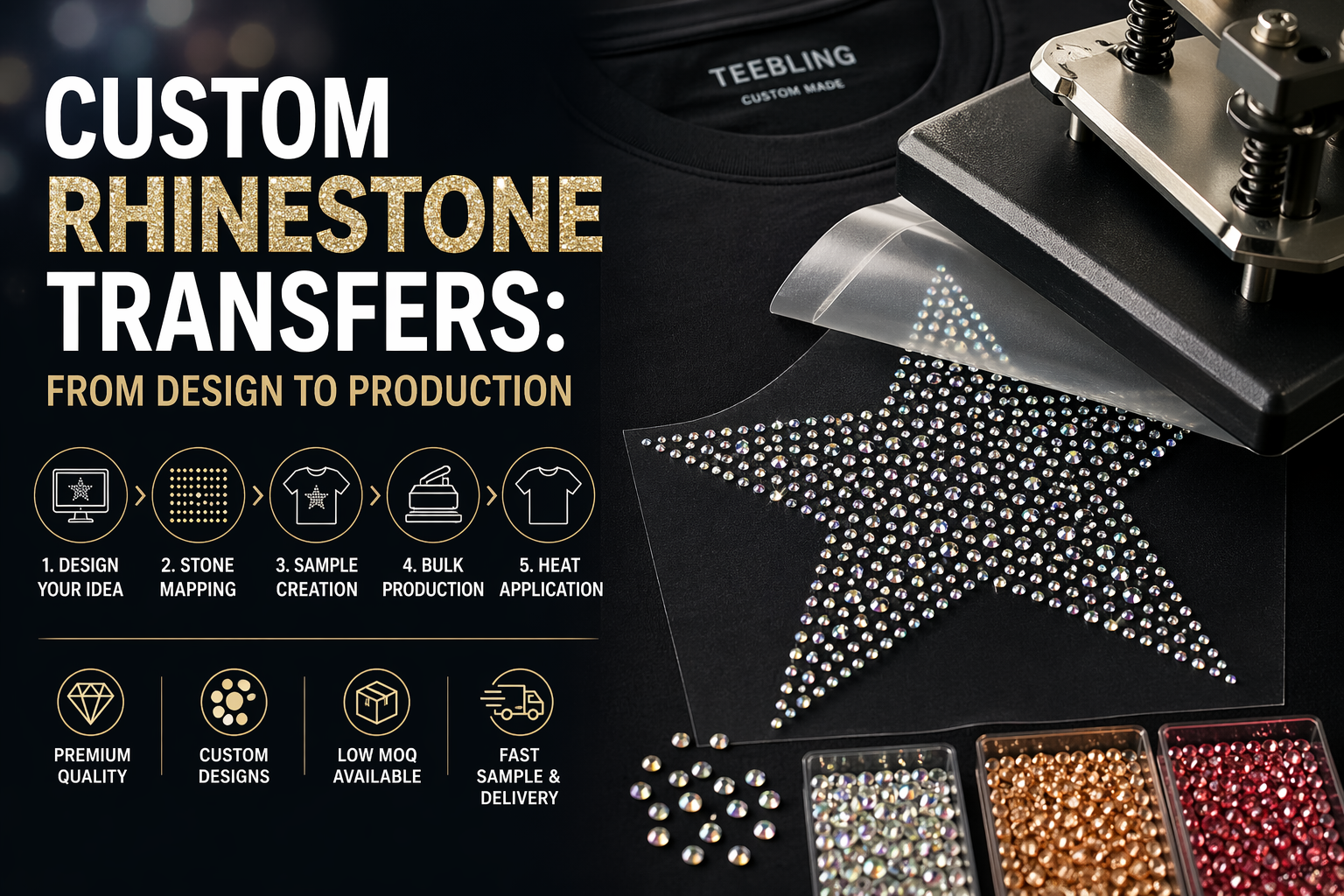
Custom Rhinestone Transfers: From Design to Production
Custom rhinestone transfers are one of the most effective ways for brands, businesses, and creators to produce unique, eye-catching apparel. From logo designs to fashion graphics, rhinestone transfers allow you to turn any idea into a high-impact product with a premium look and strong visual appeal.
In this guide, you will learn: how custom rhinestone transfers are created, the full production process, pricing factors, MOQ considerations, and how to choose the right factory supplier.
What Are Custom Rhinestone Transfers?
Custom rhinestone transfers are heat-applied designs made specifically based on your artwork, logo, text, or concept. Unlike ready-made designs, custom transfers are tailored to your exact needs, allowing full control over size, layout, colors, and stone types.
This makes them ideal for clothing brands, promotional apparel, events, and businesses looking to create distinctive products that stand out in the market.
Why Choose Custom Rhinestone Transfers?
- Create unique branded designs
- Premium sparkle effect compared to printing
- Flexible for small and bulk production
- Works on T-shirts, caps, bags, and more
- Perfect for fashion, events, and merchandise
From Design to Production: Step-by-Step Process
1. Artwork Preparation
The process begins with your design file. This can be a logo, text, or graphic. For best results, vector files (AI, SVG, or high-resolution PNG) are recommended. The clearer the design, the better the final rhinestone layout.
2. Layout & Stone Mapping
Your design is converted into a rhinestone pattern. Each stone is precisely placed to form the final shape. Factors like spacing, stone size, and density are carefully adjusted to balance appearance and durability.
3. Sample Production
A sample transfer is created for testing. This allows you to check the design, size, and overall effect before moving into full production.
4. Bulk Production
Once approved, the design goes into production. High-precision equipment ensures consistent quality, accurate placement, and efficient output.
5. Heat Application
The finished transfer is applied to garments using a heat press. Proper temperature and pressure ensure strong adhesion and long-lasting results.
MOQ (Minimum Order Quantity)
MOQ depends on the supplier and production method. Some factories offer low MOQ options for small businesses and testing, while larger orders benefit from better pricing and efficiency.
If you are starting a new brand, choosing a supplier with flexible MOQ is critical for reducing risk.
Pricing Factors
- Design size and complexity
- Number of rhinestones used
- Material (glass vs acrylic)
- Color variations
- Order quantity
More complex designs with higher stone density will cost more, but they also deliver a stronger visual impact.
Lead Time
Typical production timelines include sample creation within 24–72 hours and bulk production depending on order size. Reliable suppliers will provide clear timelines and consistent delivery.
How to Choose the Right Supplier
- Experience in rhinestone production
- Ability to handle custom designs
- Low MOQ options
- Fast sampling
- Stable quality control
Choosing the right partner ensures better product quality, faster turnaround, and fewer production issues.
Final Thoughts
Custom rhinestone transfers are a powerful tool for brands and businesses looking to create standout products. With the right design and supplier, you can produce high-quality apparel that attracts attention and drives sales.
Start Your Custom Project with Teebling
Teebling offers custom rhinestone transfers with low MOQ, fast sampling, and reliable factory production. We help brands turn ideas into real products.
Get a Quote